How Manual Lymphatic Drainage Can Help with Breast Engorgement, Low Milk Supply, and Improve Breastfeeding Comfort (Copy)
The Science Behind SCENAR Therapy, Nervous System Regulation, and Chronic Pain.
Introduction
Chronic pain affects nearly 20% of adults in the United States and is increasingly recognized as more than a structural or muscular issue alone. According to the CDC, chronic pain is commonly associated with fatigue, sleep disruption, inflammation, stress overload, muscle tension, anxiety, and reduced quality of life.
Modern neuroscience now recognizes that chronic pain often involves changes within the nervous system itself, including:
central sensitization,
autonomic nervous system dysregulation,
altered inflammatory signaling,
and heightened stress responses.
Researchers increasingly study how neuromodulation therapies may influence these pathways.
Among the growing areas of interest is adaptive biofeedback electrostimulation, including SCENAR technology, which is designed to interact dynamically with the nervous system through the skin.
Chronic Pain Is Not Always Just Structural
For decades, pain treatment focused primarily on muscles, joints, discs, and tissue damage. However, modern pain science has dramatically changed the understanding of persistent pain.
According to the International Association for the Study of Pain (IASP), chronic pain frequently involves dysfunction within the nervous system itself, particularly through processes such as:
central sensitization,
amplified pain signaling,
altered brain processing,
neuroinflammation,
and autonomic dysregulation.
Central sensitization occurs when the nervous system becomes increasingly reactive over time, amplifying pain signals even after tissue healing may have occurred.
Research published in The Lancet suggests that chronic pain patients often demonstrate increased nervous system hypersensitivity and altered pain-processing mechanisms compared to healthy individuals.
Researchers also recognize that prolonged sympathetic nervous system activation — commonly referred to as “fight-or-flight mode” — may contribute to:
increased muscle tension,
poor sleep quality,
inflammation,
digestive dysfunction,
fatigue,
and heightened pain sensitivity.
This helps explain why many individuals continue experiencing pain long after structural healing has occurred.
The Nervous System’s Role in Recovery and Healing
The autonomic nervous system plays a major role in regulating:
inflammation,
circulation,
stress responses,
tissue repair,
hormonal balance,
immune activity,
and recovery capacity.
Researchers increasingly study therapies that may help shift the body from chronic sympathetic activation toward greater parasympathetic regulation — the “rest and restore” state associated with healing and recovery.
Studies investigating vagus nerve stimulation (VNS) and neuromodulation therapies suggest electrical stimulation may influence:
pain modulation,
inflammatory pathways,
mood regulation,
sleep quality,
stress hormone activity,
and autonomic balance.
Research published in Frontiers in Neuroscience found that non-invasive neuromodulation therapies may help regulate autonomic nervous system activity and reduce inflammatory signaling associated with chronic pain states.
Scientists believe these effects may involve neurochemical pathways associated with:
serotonin,
dopamine,
endorphins,
acetylcholine,
and neuroprotective peptides.
What Is SCENAR Therapy?
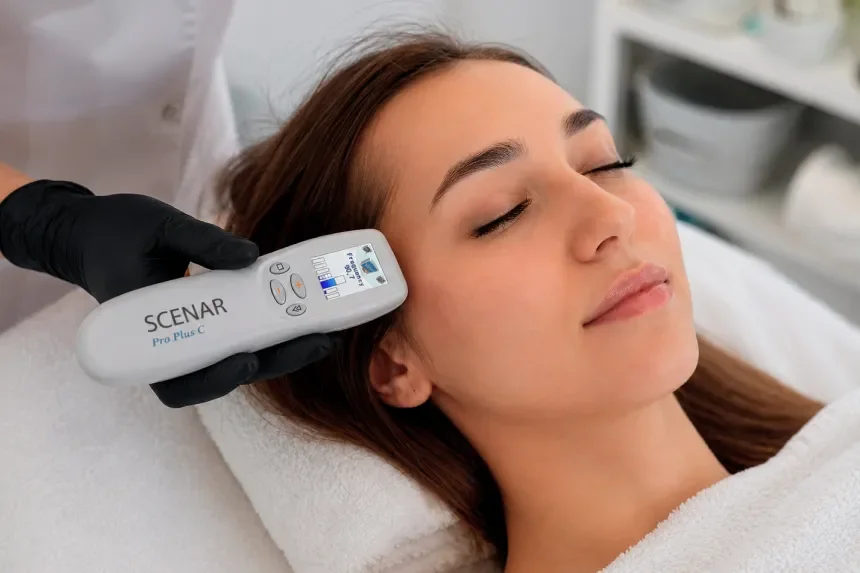
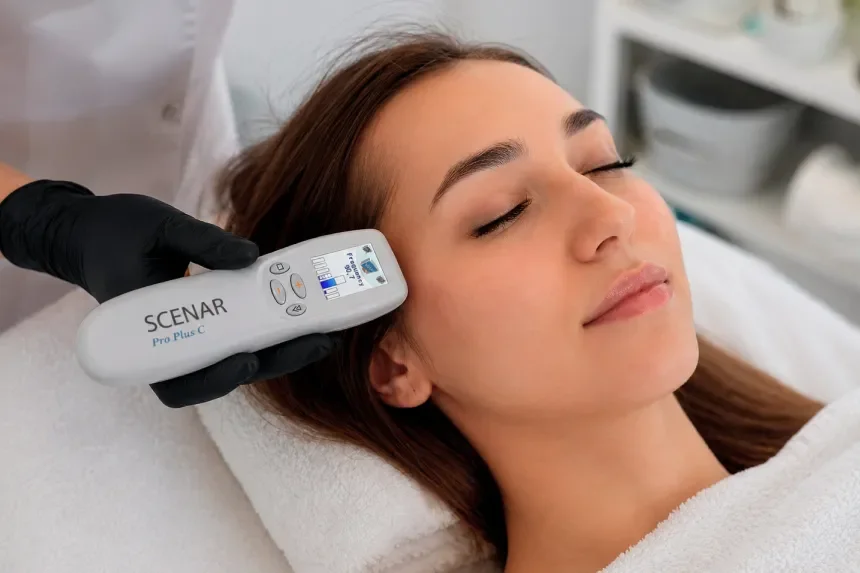
SCENAR (Self-Controlled Energo Neuro Adaptive Regulation) is a biofeedback-based electrostimulation technology designed to interact with the nervous system through the skin.
Certain SCENAR-related electrostimulation devices have received FDA 510(k) clearance for pain-related applications, classifying them within the category of non-invasive electrotherapy devices.
Unlike traditional fixed-output electrical stimulation devices, SCENAR technology continuously adapts electrical impulses based on changing skin impedance and biofeedback responses during treatment.
This adaptive approach aims to support:
nervous system regulation,
pain modulation,
circulation,
tissue recovery,
stress regulation,
and functional balance.
Rather than delivering repetitive stimulation patterns, SCENAR technology is designed to continuously “read” and adapt to the body’s changing electrophysiological responses during treatment sessions.
This adaptive feedback model is one of the primary distinctions between SCENAR and more conventional electrotherapy approaches.
What Current Research Says About Neuro-Adaptive Electrostimulation
Although SCENAR-specific research is still developing, several clinical studies investigating adaptive electrostimulation and neuromodulation therapies have shown promising results in pain management and recovery support.
Fibromyalgia Study: Significant Pain Reduction After 4 Weeks
A 2020 randomized double-blind study involving women with fibromyalgia evaluated neuro-adaptive electrostimulation therapy over eight 30-minute sessions across four weeks.
Researchers reported statistically significant improvements in:
pain intensity,
quality of life,
and symptom severity
compared to sham stimulation.
Participants receiving active treatment demonstrated approximately a 3-point reduction on the Visual Analog Scale (VAS) for pain following treatment.
The study concluded that adaptive electrostimulation may provide short-term improvement in fibromyalgia-related pain and functional symptoms.
Knee Osteoarthritis Study: Pain Reduction Maintained at 12 Weeks
A randomized sham-controlled pilot study investigating non-invasive interactive neurostimulation in adults with knee osteoarthritis found clinically meaningful improvements in pain and function.
Researchers observed:
approximately 34.5% reduction in pain scores in the active treatment group,
compared to approximately 26% in the sham group at 12-week follow-up.
Participants receiving active therapy also demonstrated improved vitality and overall patient assessment scores.
The findings suggested that adaptive neurostimulation may influence both pain perception and broader nervous system regulation.
Neck Pain and Whiplash Research
Comparative studies evaluating SCENAR therapy versus traditional TENS therapy suggest adaptive electrostimulation may provide broader neuromodulatory effects by continuously adjusting stimulation according to the body’s responses rather than delivering fixed electrical patterns.
Researchers investigating chronic neck pain and whiplash-associated disorders observed improvements in:
pain intensity,
muscle tension,
and mobility
following SCENAR-based treatment protocols.
Although larger-scale studies are still needed, these findings continue contributing to growing scientific interest in adaptive biofeedback therapies.
Neuroplasticity and the Rewiring of Pain
One of the most important developments in pain neuroscience is the concept of neuroplasticity — the nervous system’s ability to change, adapt, and reorganize over time.
Researchers now recognize that chronic pain can alter neural pathways involved in:
pain perception,
stress processing,
emotional regulation,
and autonomic function.
Over time, the nervous system may become increasingly efficient at producing pain responses, even in the absence of ongoing tissue injury.
This helps explain why some individuals continue experiencing persistent symptoms despite imaging results showing minimal structural abnormalities.
Emerging neuroscience research suggests that neuromodulation therapies may help influence these pathways by altering sensory input and autonomic regulation patterns.
Although research is ongoing, scientists increasingly investigate whether adaptive stimulation therapies may help reduce nervous system hypersensitivity associated with chronic pain conditions.
Stress, Inflammation, and the Neuroimmune Connection
One of the most important developments in modern neuroscience is the recognition that the nervous system, immune system, and endocrine system are deeply interconnected.
The field of psychoneuroimmunology demonstrates that chronic stress and prolonged nervous system activation may directly influence:
inflammation,
immune regulation,
pain sensitivity,
sleep quality,
hormonal balance,
and tissue recovery.
Research published in Nature Reviews Neuroscience shows that elevated cortisol and chronic stress activation can increase inflammatory signaling and amplify pain sensitivity over time.
This growing body of evidence helps explain why therapies focused on nervous system regulation — including breathwork, meditation, vagus nerve stimulation, biofeedback, and frequency-based therapies — may influence both physical and emotional symptoms simultaneously.
Why Some People Experience Emotional or Physical Shifts During Treatment
Some individuals report experiencing:
deep relaxation,
emotional release,
improved sleep,
reduced muscle tension,
temporary fatigue,
increased body awareness,
or temporary symptom fluctuations
during or after neuromodulation-based bodywork sessions.
Although “emotional release” is often described in holistic wellness settings, neuroscience offers measurable explanations through:
autonomic nervous system regulation,
neuroplasticity,
stress hormone pathways,
and limbic system processing.
When the body shifts from chronic stress activation toward greater parasympathetic regulation, previously suppressed tension patterns and stress responses may temporarily become more noticeable as the nervous system recalibrates.
Responses vary significantly between individuals, and ongoing research continues to investigate these mechanisms.
Conditions Commonly Associated with Neuromodulation-Based Therapies
Research investigating adaptive electrostimulation and neuromodulation therapies commonly focuses on individuals experiencing:
chronic back pain,
neck pain,
fibromyalgia,
migraines,
TMJ dysfunction,
joint discomfort,
nerve-related symptoms,
stress-related tension,
fatigue,
and post-injury recovery challenges.
Some studies also investigate potential applications in:
post-surgical recovery,
inflammatory conditions,
autonomic dysregulation,
and chronic stress-related symptom patterns.
Although research continues evolving, scientists increasingly recognize that chronic pain recovery may involve far more than muscles and joints alone.
For many individuals, the nervous system itself may be a critical piece of the recovery process.
Frequency Bodywork and SCENAR Therapy
At Lymph Bright, Frequency Bodywork with SCENAR technology is integrated into personalized sessions designed to support nervous system regulation, pain recovery, circulation, stress resilience, and overall well-being.
Sessions combine adaptive biofeedback electrostimulation with hands-on therapeutic techniques tailored to each individual’s symptoms, sensitivity, and recovery goals.
This therapy is intended to complement — not replace — medical care, physical rehabilitation, mental health support, movement practices, nutrition, and evidence-based treatment plans.
Contraindications
SCENAR therapy and frequency-based electrostimulation are not recommended for individuals with:
pacemakers,
epilepsy,
pregnancy,
or active sunburns and compromised skin in treatment areas.
Always consult with your healthcare provider regarding medical concerns.
References
CDC – Chronic Pain Statistics in the United States
International Association for the Study of Pain (IASP) – Pain Neuroscience Education
The Lancet – Chronic Pain and Central Sensitization Research
Frontiers in Neuroscience – Neuromodulation and Autonomic Regulation
Nature Reviews Neuroscience – Stress, Inflammation, and Nervous System Regulation
PubMed – Vagus Nerve Stimulation and Chronic Pain Research
Udina-Cortés et al., 2020 – Neuro-Adaptive Electrostimulation in Fibromyalgia
Selfe et al., 2008 – Non-Invasive Interactive Neurostimulation for Knee Osteoarthritis
Han et al., 2016 – SCENAR Therapy vs TENS in Neck Pain and Whiplash
Krusche-Mandl et al., 2019 – Low-Frequency Modulated Electrical Current Therapy and Osteoarthritis
Frontiers in Human Neuroscience – Non-Invasive Neurostimulation Therapies
Tarakanov et al., 2022 – SCENAR and Lower Back Pain Research