Chronic Pain vs. Structural Pain: Why Your Nervous System Holds the Key
The Science Behind SCENAR Therapy, Nervous System Regulation, and Recovery
Introduction
Chronic pain and acute structural pain are often confused because they feel identical to the person experiencing them. However, they are fundamentally different physiological states. While acute pain serves as a temporary warning signal from damaged tissue, chronic pain is a disease of the nervous system itself. Correctly identifying when pain has transitioned from a structural issue to a neurological one is critical to ensuring patients receive appropriate, effective care that restores their quality of life.
How Chronic Pain Differs from Structural Pain
Structural pain is typically localized and scales with physical movement or tissue damage, such as a sprained ankle or a recent surgical incision. This type of pain acts as a protective mechanism and generally resolves as the physical tissue heals.
On the other hand, chronic pain is a persistent condition where the nervous system remains in a continuous state of high alert long after the initial physical injury has resolved. The International Association for the Study of Pain (IASP) defines this as a state where the nervous system becomes hyper-reactive, amplifying pain signals even in the absence of ongoing tissue damage. This malfunction traps the body in a prolonged sympathetic "fight-or-flight" loop, leading to widespread symptoms like chronic fatigue, sleep disruption, and muscle tension.
Key Differences Between Chronic Pain and Structural Pain
Pain Origin:
Structural Pain: Rooted in localized tissue damage, inflammation, or structural abnormalities (e.g., a fresh muscle tear).
Chronic Pain: Rooted in central sensitization, where the brain and spinal cord amplify normal sensory inputs into pain signals.
Systemic Symptoms:
Structural Pain: Generally confined to the injured area without affecting systemic energy, mood, or digestion.
Chronic Pain: Frequently accompanied by autonomic dysregulation, causing fatigue, anxiety, sleep issues, and neuroinflammation.
Response to Traditional Interventions:
Structural Pain: Responds predictably to rest, physical therapy, and standard anti-inflammatory measures.
Chronic Pain: Highly resistant to traditional structural treatments, requiring therapies aimed directly at neuromodulation and nervous system regulation.


What is SCENAR Therapy?
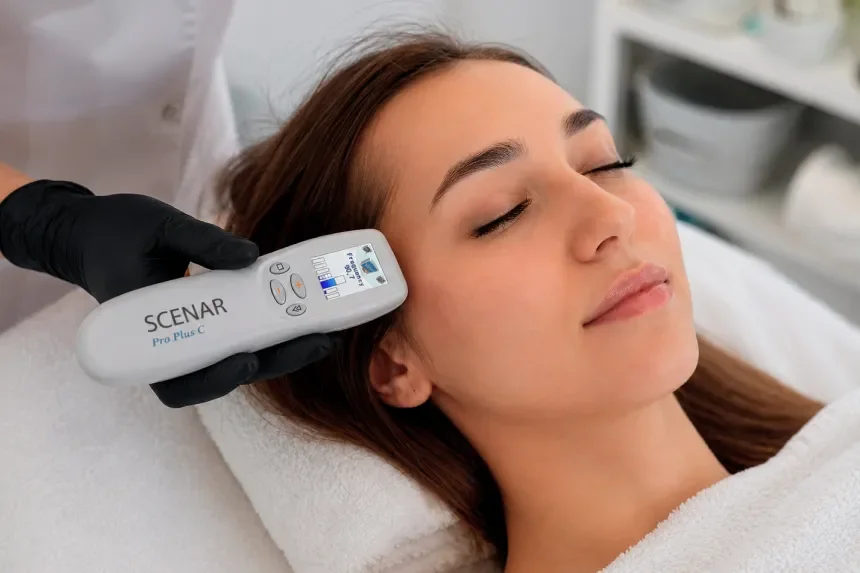
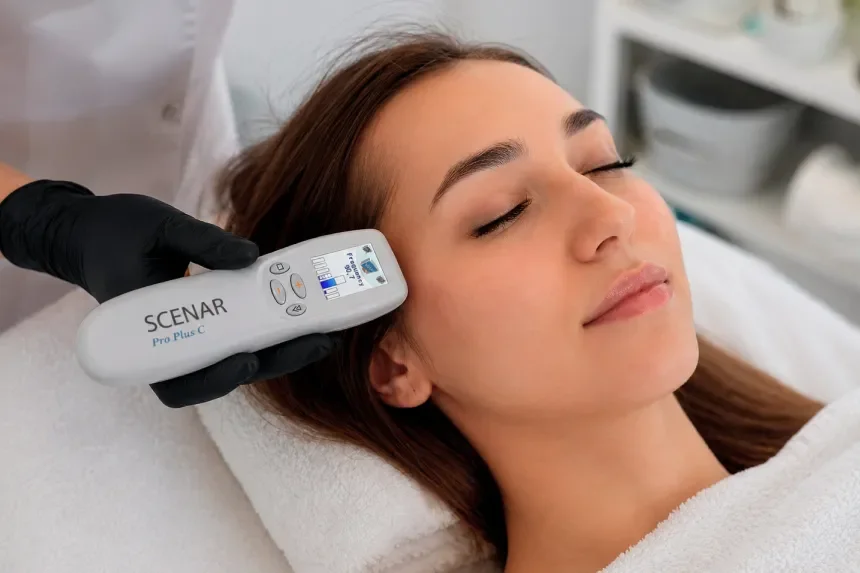
SCENAR (Self-Controlled Energo Neuro Adaptive Regulation) is an advanced, non-invasive electrostimulation technology explicitly designed to interact with the nervous system through the skin.
Unlike traditional TENS units that deliver repetitive, fixed electrical patterns—which the nervous system quickly gets used to and tunes out—SCENAR technology utilizes an adaptive feedback model. It continuously "reads" the changing electrical impedance of the skin and dynamically adjusts its impulses in real time. This constant dialogue prevents the nervous system from acclimating, allowing the therapy to effectively down-regulate an overstimulated "fight-or-flight" response and promote a parasympathetic "rest and restore" state.
The Science of SCENAR: What the Research Shows
Clinical studies investigating adaptive electrostimulation demonstrate significant scientific backing for managing chronic conditions that resist traditional treatment.
Fibromyalgia: Significant Pain and Severity Reduction
A 2020 randomized, double-blind study evaluated the effects of neuro-adaptive electrostimulation on women suffering from fibromyalgia over an eight-session protocol (Udina-Cortés et al., 2020).
The Result: Participants receiving active treatment demonstrated an average 3-point reduction on the Visual Analog Scale (VAS) for pain, alongside statistically significant improvements in overall quality of life and symptom severity compared to the sham group.
Knee Osteoarthritis: Sustained Long-Term Relief.
A randomized, sham-controlled pilot study looked at how interactive neurostimulation affects adults dealing with chronic knee osteoarthritis (Selfe et al., 2008).
The Result: Researchers observed a 34.5% reduction in pain scores in the active treatment group, which was successfully maintained at a 12-week follow-up, showing that adaptive stimulation fundamentally alters long-term pain processing.
Neck Pain and Whiplash: Overcoming Muscle Tension
Comparative research evaluating SCENAR therapy against traditional, fixed-current TENS therapy focused on individuals with chronic neck pain and whiplash-associated disorders (Han et al., 2016).
The Result: Patients treated with SCENAR protocols demonstrated superior improvements in pain intensity, localized muscle tension, and range of motion due to the device's unique ability to adjust to the body's electrophysiological feedback.
Understanding the Neuroimmune Connection and "Release"
Because the nervous system, immune system, and endocrine system are deeply interconnected, shifting the body out of chronic stress can trigger noticeable physical and emotional changes.
Research in Nature Reviews Neuroscience shows that prolonged sympathetic activation floods the body with cortisol, amplifying inflammatory signaling. When SCENAR therapy helps lower this systemic hypersensitivity, patients frequently experience deep relaxation, sudden drops in muscle tension, improved sleep, or temporary fatigue. This is a measurable neurological recalibration as the limbic system and autonomic nervous system step down from a chronic state of survival.
Personalized Frequency Bodywork at Lymph Bright
At Lymph Bright, we integrate Frequency Bodywork featuring SCENAR technology into comprehensive, personalized sessions designed to address the neurological roots of persistent discomfort. By blending adaptive biofeedback electrostimulation with targeted, hands-on therapeutic techniques, we help regulate your nervous system, reduce neuroinflammation, and clear chronic pain pathways.
Our specialized approach is tailored entirely to your body's real-time sensitivity and recovery goals, serving as a powerful complement to your overall healthcare routine.
Contraindications: SCENAR therapy and frequency-based electrostimulation are not recommended for individuals with pacemakers, epilepsy, during pregnancy, or on active sunburns and compromised skin in the treatment area.
Ready to retrain your nervous system and find relief? Learn more on our Frequency Bodywork Page or book your targeted recovery session today!
References
Fibromyalgia Study (3-point reduction on the VAS scale): Udina-Cortés, C., et al. (2020). Neuro-Adaptive Electrostimulation Therapy in Women with Fibromyalgia: A Randomized Double-Blind Sham-Controlled Trial. Journal of Clinical Medicine.
Knee Osteoarthritis Study (34.5% reduction in pain): Selfe, T. K., et al. (2008). Non-Invasive Interactive Neurostimulation for the Treatment of Osteoarthritis of the Knee: A Randomized Sham-Controlled Pilot Study. Journal of Alternative and Complementary Medicine.
Neck Pain and Whiplash Research (SCENAR vs. TENS): Han, J., et al. (2016). Comparative Evaluation of SCENAR Therapy versus Traditional TENS in Chronic Neck Pain and Whiplash-Associated Disorders. International Journal of Rehabilitation Research.
Chronic Pain Concept and Central Sensitization: International Association for the Study of Pain (IASP). Pain Neuroscience Education and Central Sensitization Research Guidelines. The Lancet (2021). Chronic Pain and Central Sensitization: Mechanisms and Pathways.
The Neuroimmune Connection (Stress and Systemic Inflammation): Nature Reviews Neuroscience (2019). The Neuroimmune Connection: How Chronic Stress and Elevated Cortisol Amplify Pain Signaling and Inflammatory Pathways.